Found a bubble or bulge in your tire in Lake View East?

A raised bubble, soft-looking bulge, exposed cord, split sidewall, or section of tread lifting away from the tire can signal internal damage. Even when the tire still holds air, it may fail without warning. Stop driving, park somewhere safe, and call Rick’s Emergency Roadside Assistance to determine whether a spare-tire change or towing is appropriate.

Tire has a bubble, bulge, split, or separated tread?

Call Rick’s for 24/7 flat tire service and wheel-lift towing in Lake View East and across Chicago’s North Side.

Call Now for Tire or Towing Help

Rick’s Emergency Roadside Assistance provides 24/7 flat tire service, roadside assistance in Lake View East, towing in Lake View East, and wheel-lift towing across Chicago’s North Side.

A tire bulge is different from ordinary low tire pressure. The tire may remain inflated while its internal structure is damaged. Adding air does not repair the weakened area, and driving farther can increase heat and stress.

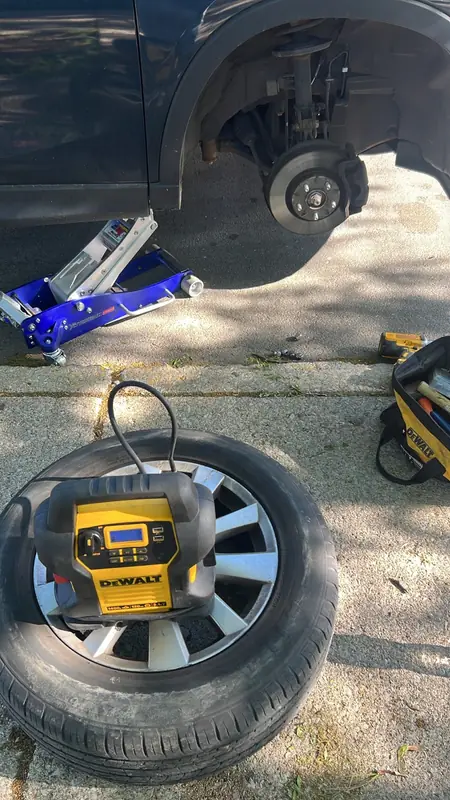
When a usable spare tire is available and the vehicle is safely parked, a roadside tire change may solve the immediate problem. Towing may be necessary when the wheel, suspension, or multiple tires are damaged, the spare is unavailable, or the vehicle cannot be safely lifted where it is parked.

Tire wobbling, separating, or vehicle blocking traffic?

Turn on your hazard lights and call 911 if the vehicle is stopped in an active travel lane, the tire is coming apart, a wheel appears loose, anyone is injured, or the situation creates an immediate danger. Do not stand beside the damaged tire in moving traffic.

Quick Answer: What Should You Do When You Find a Tire Bulge?

  1. Do not continue driving on the damaged tire.
  2. Turn on the hazard lights.
  3. Park on firm, level ground away from traffic when possible.
  4. Do not press, puncture, cut, or attempt to flatten the bulge.
  5. Check whether a compatible, properly inflated spare is available.
  6. Look for wheel or suspension damage from a safe position.
  7. Call for roadside tire service or towing.

What Does a Tire Bulge or Bubble Look Like?

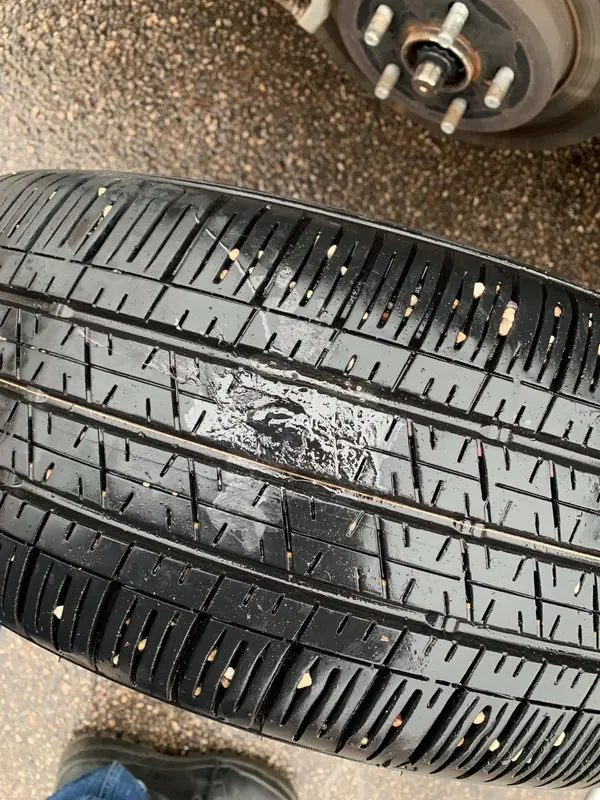
A tire bulge usually appears as a rounded, raised, or swollen section on the sidewall. It may resemble a small bubble, blister, lump, or soft bump protruding from the tire.

Some bulges are easy to see while the vehicle is parked. Others appear only when the damaged section rotates toward the outside or when the tire is carrying the vehicle’s weight.

Damage may also appear as a split, crack, exposed cord, distorted tread, separated rubber, or a section that no longer follows the tire’s normal shape.

“`

Sidewall Bubble

A rounded bump or blister protrudes from the side of the tire.

Sidewall Split

A crack or opening appears in the rubber near the tire’s side.

Exposed Cords

Fabric or metal reinforcement becomes visible through damaged rubber.

Tread Separation

Part of the tread lifts, waves, cracks, or begins separating from the tire body.

Uneven Tire Shape

The tire no longer appears round or consistent as the wheel rotates.

Repeated Thumping

A rhythmic thump, vibration, or wobble becomes faster as vehicle speed increases.

“`

Can You Drive on a Tire With a Bubble?

Driving on a tire with a visible bubble or bulge is not recommended. The damaged area may no longer have normal internal support.

The tire can become more stressed while turning, braking, accelerating, crossing potholes, carrying weight, or building heat at higher road speeds.

A tire that appears stable while parked can fail suddenly once the vehicle begins moving. Stop driving and replace the tire with a usable spare or arrange towing.

Do not “drive slowly” to the tire shop

Lower speed does not repair the damaged tire. Even a nearby drive through Lake View East can involve potholes, turns, braking, cyclists, pedestrians, and uneven pavement that place additional stress on the sidewall.

What Causes a Tire Bulge?

A bulge may develop after the tire is pinched between the wheel and a pothole, curb, road edge, or other hard object. The outside rubber may remain mostly intact while internal reinforcement is damaged.

Tire damage may also be connected to underinflation, overloading, manufacturing defects, age, previous puncture damage, impact history, or driving after pressure loss.

These are possible causes rather than a roadside diagnosis. A tire shop should inspect the damaged tire, wheel, remaining tires, and the vehicle’s suspension and alignment when an impact occurred.

“`

Pothole Impact

The tire may be compressed sharply between the wheel and the pothole edge.

Curb Strike

Hitting or climbing a curb may damage the sidewall, wheel, steering, or suspension.

Low Tire Pressure

Driving while underinflated may create excessive sidewall flexing and heat.

Excessive Vehicle Load

Heavy cargo or equipment may place additional stress on tires and suspension.

Tire Age or Deterioration

Older rubber may crack, weaken, or become more vulnerable to impact damage.

Internal Tire Defect

Internal separation may occasionally develop without an obvious recent impact.

“`

Do Not Press, Puncture, or Cut the Bulge

A tire bubble is not an air pocket that should be flattened or released. Pressing it, cutting it, or inserting a sharp object can cause sudden pressure loss.

Do not use tire sealant, plugs, patches, tape, glue, or other temporary products on a damaged sidewall.

Sidewall structural damage generally requires tire replacement rather than ordinary puncture repair.

Avoid these tire-bulge mistakes:

  • Do not continue driving on the damaged tire.
  • Do not press, puncture, cut, or flatten the bubble.
  • Do not add extra air to make the bulge disappear.
  • Do not use a plug or sealant on sidewall damage.
  • Do not stand beside the tire in moving traffic.
  • Do not crawl under the vehicle to inspect suspension parts.
  • Do not install an unsafe, flat, or incompatible spare tire.

Can Adding Air Fix the Problem?

Adding air does not repair internal tire damage. A bulge may remain visible at normal pressure or become more noticeable as pressure increases.

Do not overinflate the tire in an attempt to improve its shape or keep it from contacting the pavement.

If the tire-pressure warning is on, the vehicle may also have low pressure, but the bulge still requires replacement.

Tell Rick’s whether the tire is holding air, slowly losing pressure, completely flat, or visibly separating.

When a Roadside Tire Change May Help

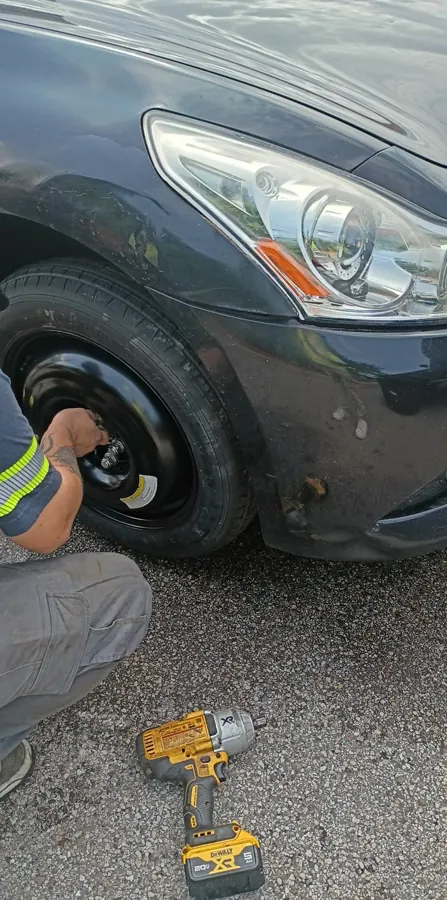
Rick’s may be able to replace the damaged tire with the vehicle’s spare when the vehicle is parked in a safe and accessible location.

The spare must be present, properly inflated, compatible with the vehicle, and usable. The wheel, lug hardware, suspension, and lifting points must also appear safe.

A roadside tire change may not be appropriate when the wheel is bent, the vehicle is leaning, the tire is jammed against the body, multiple tires are damaged, or the vehicle is positioned on unstable ground.

“`

Roadside Tire Service May Help When:

  • Only one tire appears damaged.
  • The wheel remains straight and securely attached.
  • A compatible, inflated spare is available.
  • The vehicle is on firm, level ground away from traffic.

Towing Is Usually Safer When:

  • The wheel is bent, cracked, tilted, or pushed backward.
  • The tire is separated, shredded, or rubbing the vehicle.
  • More than one tire is damaged.
  • No safe or compatible spare is available.
“`

What If the Vehicle Has No Spare Tire?

Many newer vehicles do not include a conventional spare tire. Some use an inflator kit, sealant, run-flat tires, or limited storage space instead.

An inflator kit or sealant should not be treated as a repair for a visible sidewall bulge, split, exposed cord, or separated tread.

When no usable spare is available, the vehicle may need towing to a tire shop, dealership, repair facility, home, or another approved location.

Can You Use a Temporary Spare Tire?

A temporary spare may be used when it is compatible, properly inflated, securely installed, and allowed by the vehicle manufacturer.

Temporary spares often have speed, distance, load, and placement limitations. Review the owner’s manual and the markings printed on the spare tire.

AWD and 4WD vehicles may have additional tire-size and drivetrain requirements. Tell Rick’s the exact make, model, year, drivetrain, damaged-tire position, and spare-tire type.

Do not install a temporary spare when it is flat, cracked, damaged, too old, or incompatible with the vehicle.

Tire Bulge After Hitting a Pothole

A pothole can damage more than the tire. The wheel may bend or crack, and steering, suspension, alignment, or wheel-bearing components may also be affected.

Look from a safe location for a crooked wheel, low corner, tire rubbing, leaking fluid, new scraping, or a steering wheel that no longer sits straight.

If the vehicle shakes, pulls, leans, scrapes, or has a wheel that no longer looks properly positioned, towing may be safer than a basic tire change.

Do not drive around the block to test whether the pothole caused additional damage.

Tire Bulge After Hitting a Curb

A curb impact may pinch the sidewall, bend the wheel, change alignment, or damage steering and suspension parts.

Stop driving if the tire rubs, the wheel tilts, the steering changes, the vehicle pulls, or grinding and clunking begin.

Tell Rick’s which tire hit the curb, whether the wheel can rotate normally, and whether the vehicle is pressed tightly against the curb.

Photos taken from a safe position may help show the tire, wheel, curb distance, vehicle direction, and available working space.

Tread Separation and Repeated Thumping

Tread separation may cause a rhythmic thumping, vibration, wobble, or slapping sound that becomes faster as vehicle speed increases.

The tread may lift away from the tire body, become uneven, or strike the wheel well and nearby body components.

Reduce speed gradually and stop as soon as a safe location is available. Do not accelerate to determine whether the sound changes.

Towing is generally safer when the tire is coming apart, bodywork is damaged, or the wheel no longer rotates normally.

Tire tread coming off?

Stop driving. Loose tread can damage the wheel well, bumper, body panels, brake lines, wiring, and nearby components. Do not pull on separated tread while the tire is under pressure.

What If the Tire Still Holds Air?

A tire does not need to be flat to be unsafe. The outer rubber may hold pressure while internal reinforcement is weakened.

The absence of a tire-pressure warning does not prove that the tire is structurally sound.

Do not use the pressure reading alone to decide whether to continue driving. A visible bulge, split, exposed cord, or separation requires replacement.

Check the Other Tires From a Safe Position

When one tire has visible damage, inspect the remaining tires from a safe standing position. Look for other bulges, cracks, exposed cords, low pressure, uneven wear, or sidewall damage.

Do not crawl beneath the vehicle or place your hands close to a visibly damaged or unstable tire.

Multiple damaged tires may require towing even when one spare is available.

Tell Rick’s how many tires appear affected and whether the vehicle carries cargo, tools, equipment, or another heavy load.

Tire Bulge on an AWD or 4WD Vehicle

AWD and 4WD vehicles may have tire-size, tread-depth, and manufacturer requirements that affect spare-tire use and towing.

Tell Rick’s whether the vehicle is 2WD, AWD, or 4WD and identify which tire is damaged.

Rick’s uses wheel-lift towing only. Service for AWD and 4WD vehicles must be confirmed after the exact vehicle, damaged-tire position, wheel movement, spare availability, and towing requirements are reviewed.

Do not assume that any wheel can be lifted or that any temporary spare is safe for every drivetrain.

When Towing Is the Safer Choice

Towing is appropriate when the tire is bulging, separating, shredded, split, or exposing internal cords and no usable spare can be installed safely.

The vehicle should also be towed when the wheel is bent or cracked, the tire rubs the body, suspension damage is visible, multiple tires are affected, or the vehicle is parked where a roadside tire change cannot be performed safely.

Rick’s provides 24/7 wheel-lift towing across Chicago’s North Side for cars, SUVs, pickup trucks, work vehicles, light-duty vehicles, and select medium-duty situations.

Rick’s uses wheel-lift towing only. Service depends on the drivetrain, damaged-tire position, wheel condition, transmission position, steering, parking-brake status, access, and manufacturer towing requirements.

Tell Rick’s Which Tire Is Damaged

Identify whether the affected tire is front left, front right, rear left, or rear right.

Explain whether the tire is still inflated, slowly losing air, completely flat, separated, rubbing, or exposing cords.

Tell Rick’s whether the wheel appears straight, bent, cracked, tilted, or pushed backward.

Do not roll the vehicle forward simply to rotate the damaged section into view.

Helpful tire and vehicle details:

  • Which tire has the bulge or bubble?
  • Is the tire still holding air?
  • Is the sidewall split or are cords visible?
  • Is tread separating or creating a thumping sound?
  • Did the vehicle recently hit a pothole or curb?
  • Does the wheel appear bent, tilted, or damaged?
  • Is a compatible, inflated spare tire available?
  • Does the vehicle roll, steer, and shift into neutral?
  • Are the keys available and does the parking brake release?

Know Your Exact Lake View East Pickup Location

Lake View East has bicycle lanes, crowded curbside parking, loading zones, apartment garages, narrow alleys, one-way streets, private lots, pedestrians, and busy intersections.

Provide the nearest cross streets, complete address, building, business, parking garage, parking level, alley, lot, or recognizable landmark.

Useful local references may include Clark and Belmont, Broadway and Belmont, Wellington and Halsted, Sheridan and Diversey, Belmont Harbor, Wrigleyville, Northalsted, Lincoln Park, Uptown, or another nearby North Side location.

Explain whether the damaged tire faces traffic, a curb, wall, garage column, parked vehicle, or another obstruction.

Helpful pickup details to mention:

Lake View East Tire Bulge Sidewall Bubble Tread Separation Pothole Damage Parking Garage Broadway Belmont Halsted Clark Wrigleyville Lincoln Park

Tire Bulge Inside a Parking Garage

A damaged tire inside an apartment garage, condominium structure, underground lot, narrow parking space, or low-clearance building may create additional access challenges.

Do not drive the vehicle up or down a garage ramp on the damaged tire. The sidewall may fail under the additional load and turning force.

Provide the garage name, clearance height, parking level, space number, entrance, gate code, ramp direction, damaged-tire position, and available working room.

Rick’s specializes in many tight-space roadside and wheel-lift towing situations. Service depends on safe access, clearance, damaged-tire position, wheel condition, drivetrain, steering, spare availability, and equipment space.

“`

Clearance Height

Provide the posted entrance height before service is arranged.

Damaged-Tire Position

Explain whether the tire faces a wall, curb, column, ramp, gate, or another vehicle.

Spare-Tire Availability

Say whether a compatible, inflated spare and wheel-lock key are available.

Access Instructions

Share gate codes, parking levels, space numbers, and building entry requirements.

“`

Wheel Locks and Missing Tire Tools

Some vehicles use locking lug nuts that require a matching wheel-lock key. Tell Rick’s whether the key is available and where it is stored.

The wheel-lock key may be in the glove compartment, trunk, spare-tire area, center console, tool kit, or another storage location.

Do not hammer, drill, or force a wheel lock at the roadside. Missing or damaged wheel-lock hardware may prevent a normal tire change and require towing or specialty service.

Where Should the Vehicle Be Towed?

The vehicle may need to go to a tire shop, dealership, general mechanic, wheel-repair facility, suspension and alignment shop, home, business, or another approved destination.

Contact the destination before the tow whenever possible. Explain that the tire has a bulge, sidewall damage, separated tread, or possible pothole or curb damage.

If the shop is closed, ask whether it permits after-hours delivery. Confirm the correct parking area, service entrance, gate access, and key-drop instructions.

Rick’s also provides long-distance towing when the preferred tire shop, dealership, or repair facility is outside the immediate Lake View East area.

Rick’s helps North Side drivers with:

✓ Tire bulges and sidewall bubbles
✓ Tread separation concerns
✓ Flat tire changes
✓ Pothole and curb damage
✓ Damaged wheel towing
✓ Lake View East roadside assistance
✓ 24/7 wheel-lift towing
✓ Parking garage service
✓ Tight-space towing
✓ Tire-shop towing
✓ Dealership towing
✓ Work vehicle towing
✓ Local and long-distance towing
✓ Emergency roadside assistance

What to Tell Rick’s When You Call

“`

1. Describe the Tire Damage

Explain whether the tire has a bubble, split, exposed cords, separated tread, low pressure, or complete air loss.

2. Explain What Happened

Mention a recent pothole, curb strike, road debris impact, pressure warning, vibration, or repeated thumping.

3. Vehicle and Spare Details

Provide the make, model, year, drivetrain, damaged-tire position, spare availability, and wheel-lock key status.

4. Location and Destination

Provide both addresses and explain garage, ramp, curb, alley, gate, parking, traffic, or receiving restrictions.

“`

For a general towing-price reference, review Rick’s Chicago towing rate calculator. Calculator results are for reference only, and final pricing and service availability should be confirmed directly.

Why Local Tire Help Matters in Lake View East

Lake View East has potholes, bicycle lanes, tight curbside parking, apartment garages, narrow alleys, loading zones, pedestrians, one-way streets, and busy intersections.

A damaged tire may be positioned directly beside traffic, against a curb, inside a low-clearance garage, or in a location where a safe tire change is not possible.

Rick’s Emergency Roadside Assistance understands these North Side access challenges. Whether the vehicle is outside an apartment, near a business, inside a garage, along Belmont, in Wrigleyville, in Northalsted, or close to the lakefront, Rick’s can review whether tire service or towing is appropriate.

Need Help for a Tire Bulge in Lake View East?

If you find a tire bubble, sidewall bulge, split, exposed cord, or separated tread in Lake View East, Lakeview, Wrigleyville, Northalsted, Lincoln Park, Uptown, Roscoe Village, Andersonville, Edgewater, Lincoln Square, North Center, Sauganash, or another nearby North Side neighborhood, stop driving and call Rick’s Emergency Roadside Assistance.

Rick’s is available 24/7 for flat tire changes, damaged tires and wheels, pothole impacts, parking garage service, wheel-lift towing, tire-shop towing, dealership towing, work vehicles, local towing, long-distance towing, and emergency roadside assistance.

Tire bubble, separated tread, or no safe spare available?

Stop driving and call Rick’s for 24/7 roadside assistance or wheel-lift towing in Lake View East and across Chicago’s North Side.

Call Rick’s Now

FAQs About Tire Bulges, Bubbles, and Sidewall Damage

“`
Can I drive with a small bubble in my tire?

No. A visible bubble or bulge may indicate internal structural damage and can fail without warning, even when the tire still holds air.

Can a tire bulge be repaired?

Sidewall structural damage generally requires tire replacement rather than a plug, patch, sealant, or other ordinary puncture repair.

Will adding air make the bulge go away?

No. Adding air does not repair internal tire damage and may place more pressure on the weakened area.

Can a pothole cause a sidewall bubble?

Yes. A pothole impact may pinch the tire between the wheel and roadway edge, damaging internal reinforcement even when the outer rubber remains mostly intact.

Can Rick’s change the damaged tire?

Rick’s may be able to install a compatible, properly inflated spare when the vehicle is safely parked and the wheel, suspension, lifting points, and lug hardware are usable.

What if my vehicle has no spare tire?

The vehicle may need towing to a tire shop, dealership, repair facility, home, or another approved destination.

Can tire sealant fix a sidewall bubble?

No. Tire sealant is not a repair for a bulging, split, separated, or structurally damaged sidewall.

Should I tow the vehicle if the wheel is bent?

Yes. A bent, cracked, tilted, rubbing, or improperly positioned wheel should be professionally inspected before the vehicle is driven again.

Can Rick’s help inside a parking garage?

Rick’s can help with many garage and tight-space situations. Provide the clearance height, parking level, gate access, damaged-tire position, spare availability, and whether the vehicle rolls and steers.

Is tire and towing help available after hours?

Rick’s Emergency Roadside Assistance is available 24/7. Service depends on the tire and wheel condition, spare availability, location, access, drivetrain, and whether the vehicle can be handled safely.

“`

Leave a Reply

Your email address will not be published. Required fields are marked *